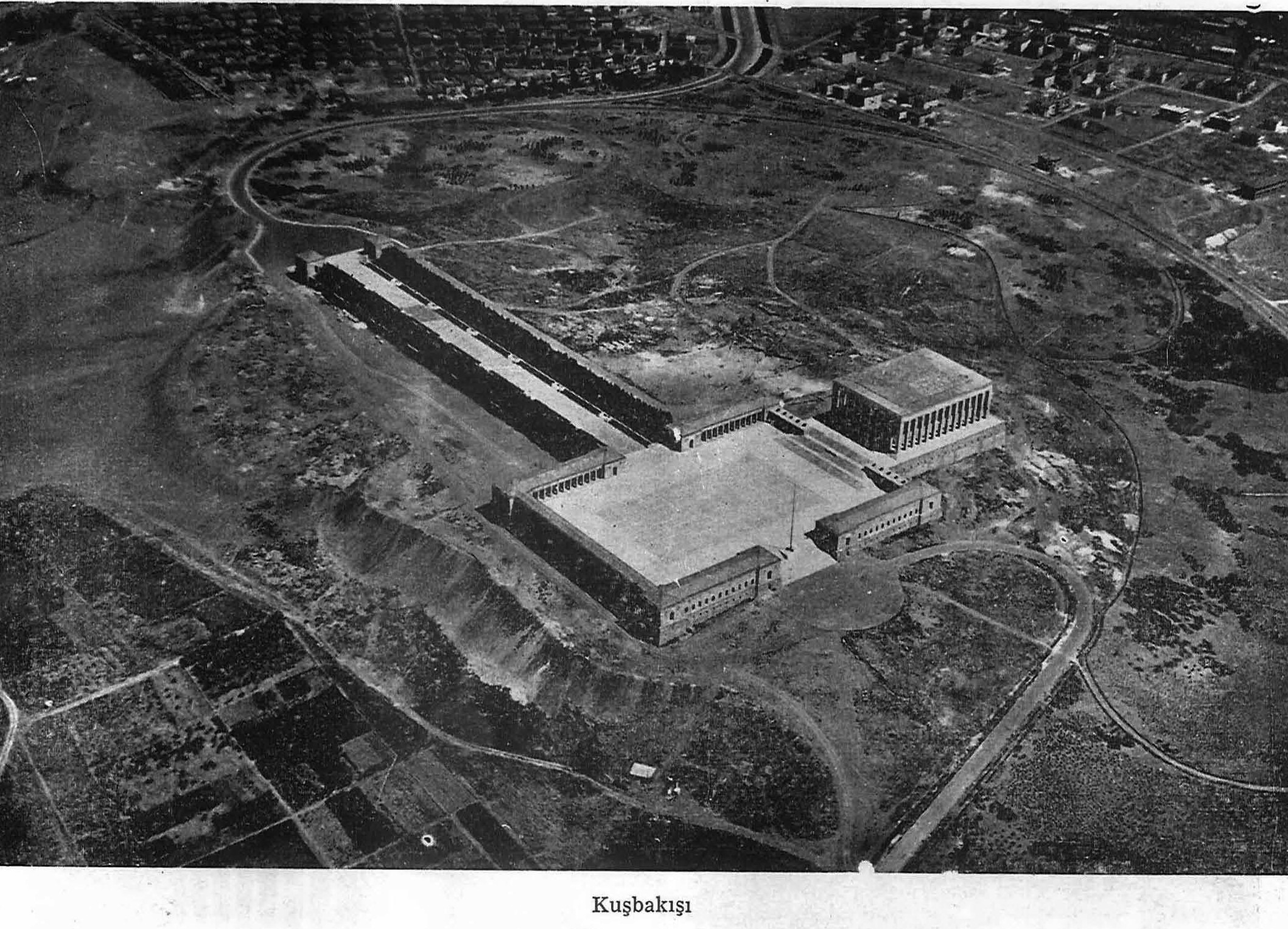
Károly Weichinger, a member of the jury for the design competition for the mausoleum of Mustafa Kemal Atatürk, Anıtkabir
The death of Mustafa Kemal Atatürk in 1938 plunged the entire Turkish nation into mourning and, at the same time, led to the creation of one of the most symbolic buildings of early Republican-era architecture: the complex of the president’s mausoleum, known as Anıtkabir.
The jury for the design competition was chaired by Paul Bonatz, an influential German architect of the era, and the members of the jury were Turkish experts—Arif Hikmet Holtay, Muammer Çavuşoğlu, and Muhlis Sertel—as well as foreign architects: Ivar Tengborn of Sweden and Károly Weichinger of Hungary.
Károly Weichinger (1893–1982) was a Kossuth Prize-winning Hungarian architect, university professor, and Doctor of Technical Sciences; he was a leading figure in Hungarian architecture of the era and, as a professor at the Technical University, served as a mentor to numerous talented architects.
Weichinger deemed each of the 49 entries submitted in response to the call for proposals to be works of high quality; regarding the architectural concept of the competition, he characterized it as follows: “It was a great contest between Antiquity, the Medieval Architecture, and the present; between tradition and innovation; and between profound artistic expressions and ephemeral fashions.” The winning design was created by Turkish architects Emin Onat and Orhan Arda, about which Weichinger wrote: “The winner was an architecture designed in stone—timeless, enduring, with simple volumes and plans.”