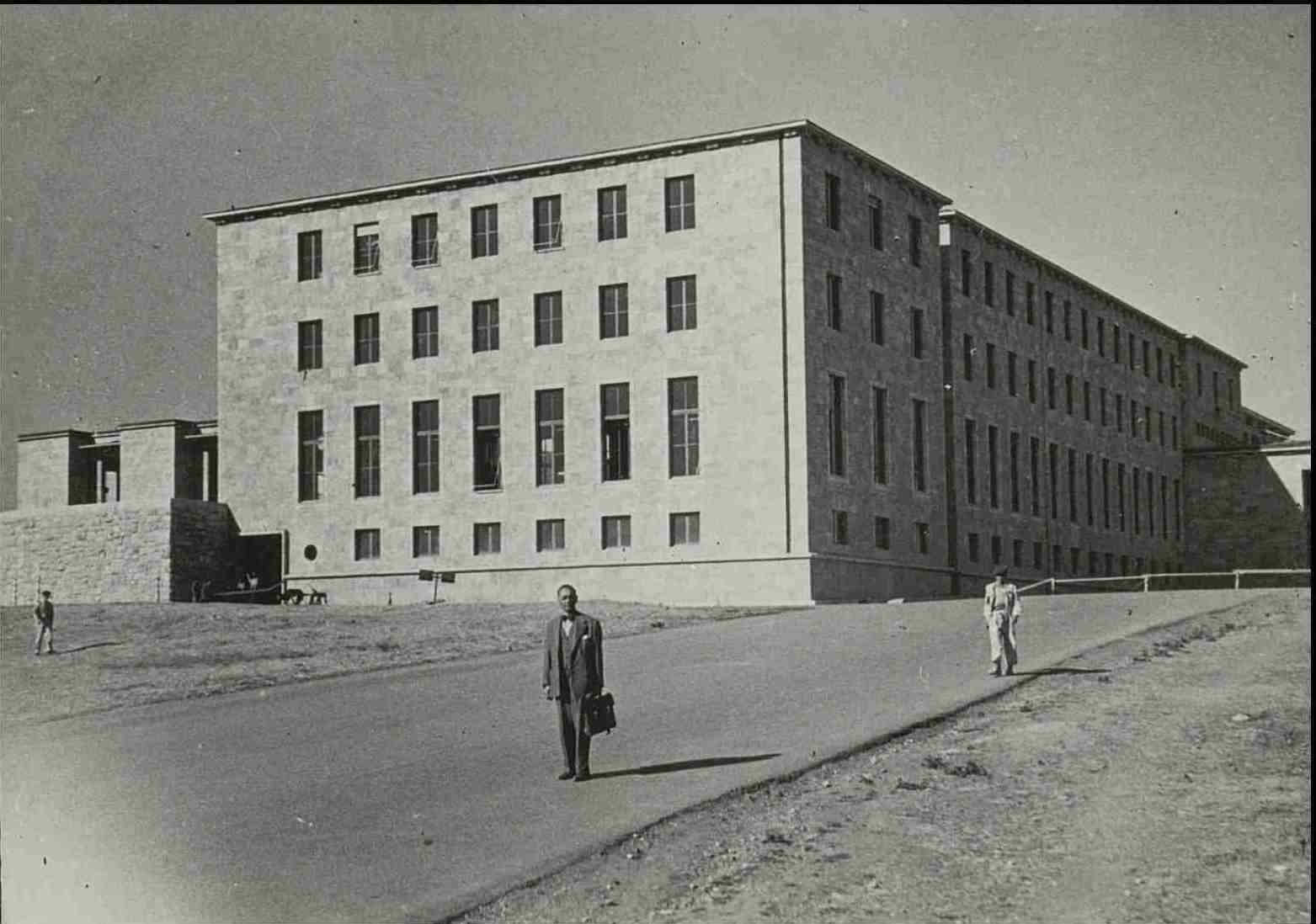
One of the leaders of the construction of the Turkish Grand National Assembly’s Building: Ferenc Hillinger
During the 1920s and 1930s, as the new capital of the Republic of Turkey, Ankara, was being built, the names of two Hungarian architects appear among the entries in one of the design competitions for the most important public buildings.
In fact, József Vágó also entered the design competition for the building of the Turkish Grand National Assembly, which was announced by a resolution dated January 11, 1937.
The design prepared by József Vágó for the competition for the Turkish Grand National Assembly building was also published in the Turkish press—all competition entries were published in the pages of Arkitekt, the most important Turkish architectural journal of the era. Of the 14 architects who entered the competition, it was ultimately Clemens Holzmeister’s design that was realized; he was already an experienced architect in Republican-era Turkey at the time. Thus, although the building did not take shape based on the Hungarian-born architect’s vision, its realization still had a Hungarian connection. Ferenc Hillinger, in fact, worked on overseeing its construction.
As a Hungarian architect, Ferenc Hillinger thus followed a path typical of the German, Austrian, or French architects of that era in Turkey. During the early years of the Republic, he taught in both Istanbul and Ankara, participated in the design and construction of numerous buildings alongside German and Austrian colleagues—primarily Bruno Taut and Clemens Holzmeister—and published scholarly articles in professional journals. Thus, he can rightly be considered a central figure in the Hungarian-German-Turkish relations of that era.